
Wisdom Teeth
About Wisdom Teeth
Wisdom teeth — or third molars — are the last teeth to develop, typically emerging in the mid-to-late teens or early twenties. Most people develop four, located at the very back of the mouth behind the second molars.
When there is enough room in the jaw, they can erupt and function normally. When there isn’t, they become impacted and often times need to be removed.
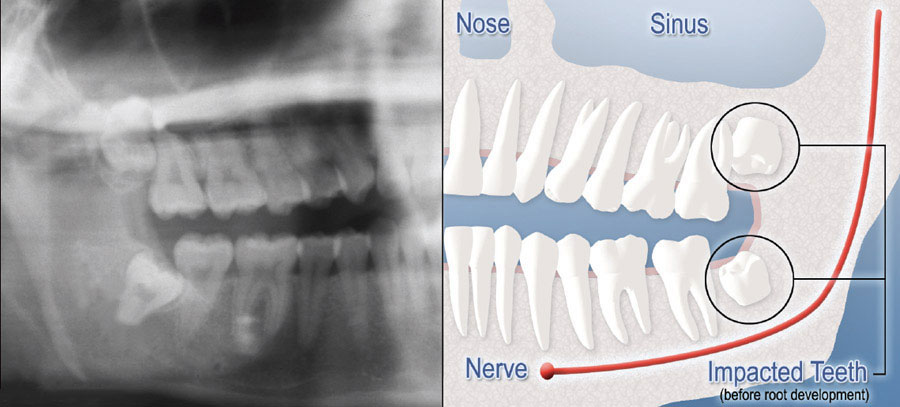
What Does “Impacted” Mean?
An impacted wisdom tooth is one that cannot fully emerge into its proper position due to lack of space. There are three types:
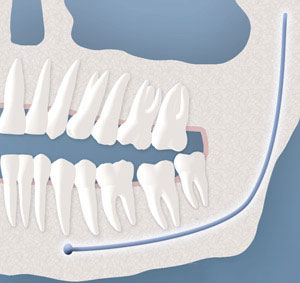
Soft Tissue Impaction
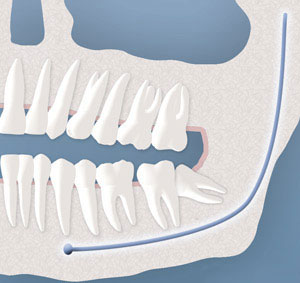 Partial Bony Impaction
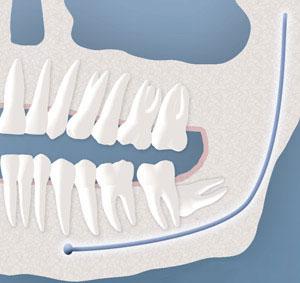 Complete Bony Impaction
- Soft Tissue Impaction — there is not enough room to allow the gum tissue to retract for adequate cleaning of the tooth.
- Partial Bony Impaction — there is enough space to allow the wisdom tooth to partially erupt. However, the tooth cannot function properly in the chewing process, and creates cleaning problems, among others.
- Complete Bony Impaction — there is NO space for the tooth to erupt. It remains embedded in the jaw bone or if even partially visible requires complex surgical techniques for removal. The impacted wisdom tooth may also be in an unusual position and difficult to remove. This situation can also arise when the shape or size of the jaw bone and other facial structures make removal of this tooth significantly more complex.
Why Do Impacted Wisdom Teeth Need to Be Removed?
Even without symptoms, impacted wisdom teeth can cause serious problems over time. The four most common complications are:
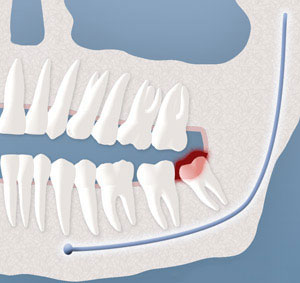 Infection
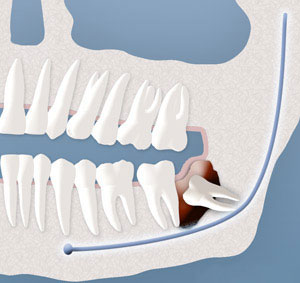 Cyst
Cyst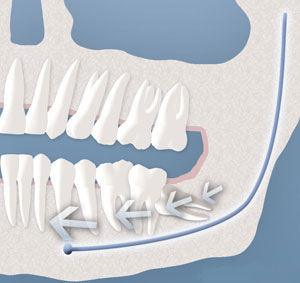 Crowding
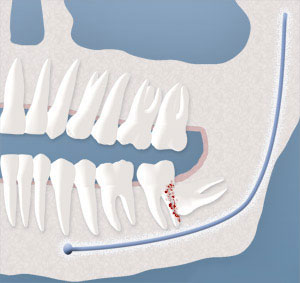 Tooth Damage
- Damage to Adjacent Teeth — the second molar directly in front is at risk of gum disease, bone loss, and decay when a wisdom tooth cannot be properly cleaned around.
- Infection (Pericoronitis) — bacteria trapped around a partially erupted tooth causes recurrent pain, swelling, and difficulty chewing or swallowing.
- Cyst Formation — fluid-filled cysts can develop inside the jawbone, slowly destroying surrounding bone and adjacent teeth. Far harder to treat if left until adulthood.
- Crowding — pressure from impacted wisdom teeth can shift the front teeth, undoing orthodontic work.
The ideal time for removal is the mid-to-late teens, when roots are shorter, bone is less dense, and healing is faster. Problems increase significantly after age 25, with increased risks for surgical complications.
Have questions about your wisdom teeth?
Call 603-883-4008 or request a consultation at apexomfs.com. A panoramic X-ray at your visit will give us a clear picture of your situation.